The central argument
What this book is trying to do
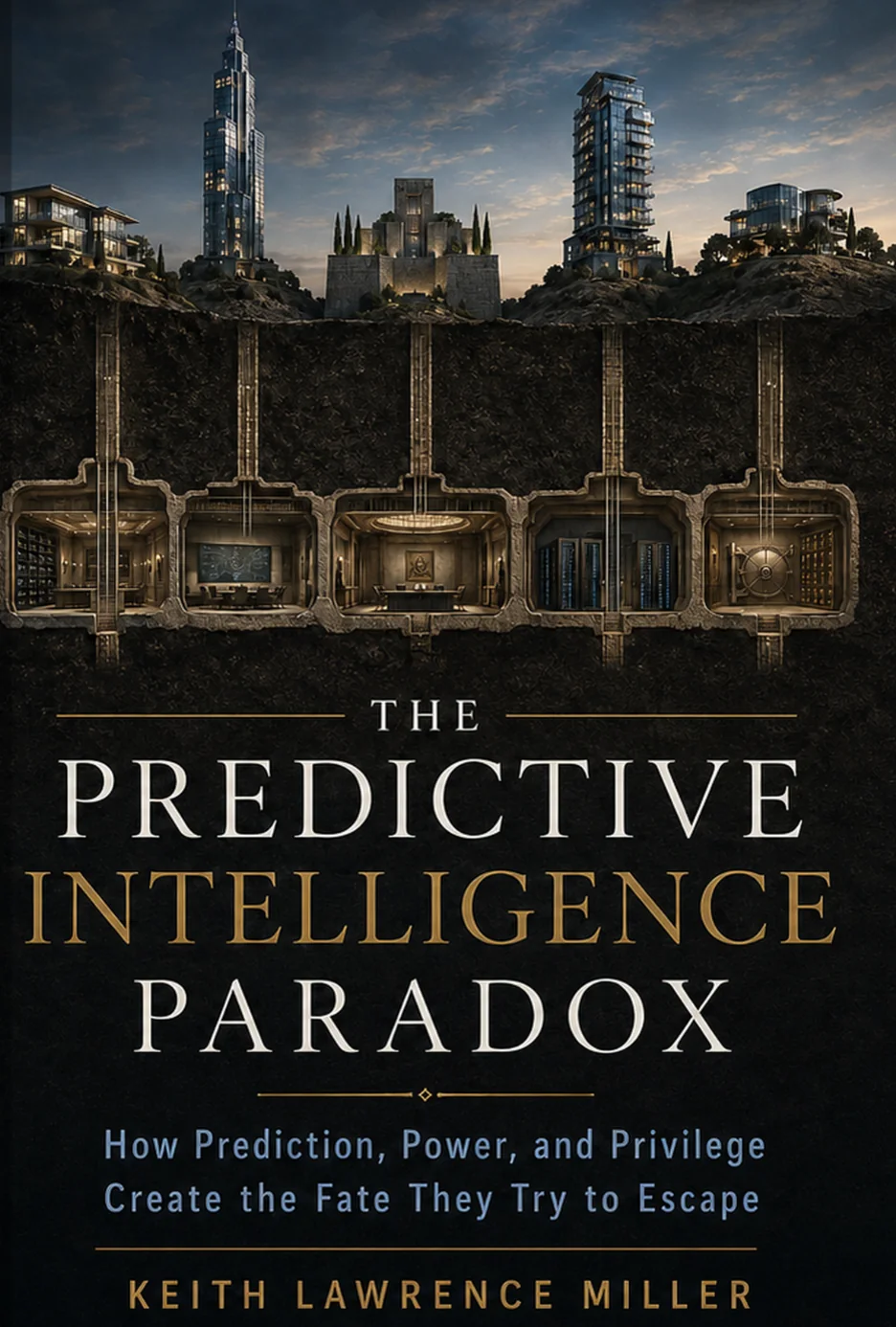
Prediction is not neutral when institutions act on forecasts. Scores, rankings, risk estimates, and eligibility systems can change the behavior and opportunity structures that later appear to validate the prediction.
Who it is for: Leaders, policymakers, technologists, HR professionals, educators, risk leaders, and readers concerned with algorithmic prediction, power, feedback loops, and institutional inequality.
Architecture
Inside the book
01Prediction and institutional action
02Feedback loops
03Privilege and access
04Self-fulfilling systems
05Governance and recourse
06Designing predictions that can be challenged
Key ideas
Questions and concepts carried through the work
- Forecasts become causal when they change who receives resources, scrutiny, access, or opportunity.
- Prediction error is not evenly distributed when institutional power is unequal.
- A model can appear more accurate because the system reorganizes reality around its output.
- Responsible prediction requires appeal, audit, transparency, and attention to downstream feedback.
Author platform
Use the book as an entry point
The 2.0 site connects books to speaking, essays, frameworks, and adjacent titles rather than treating each publication as an isolated product.