The central argument
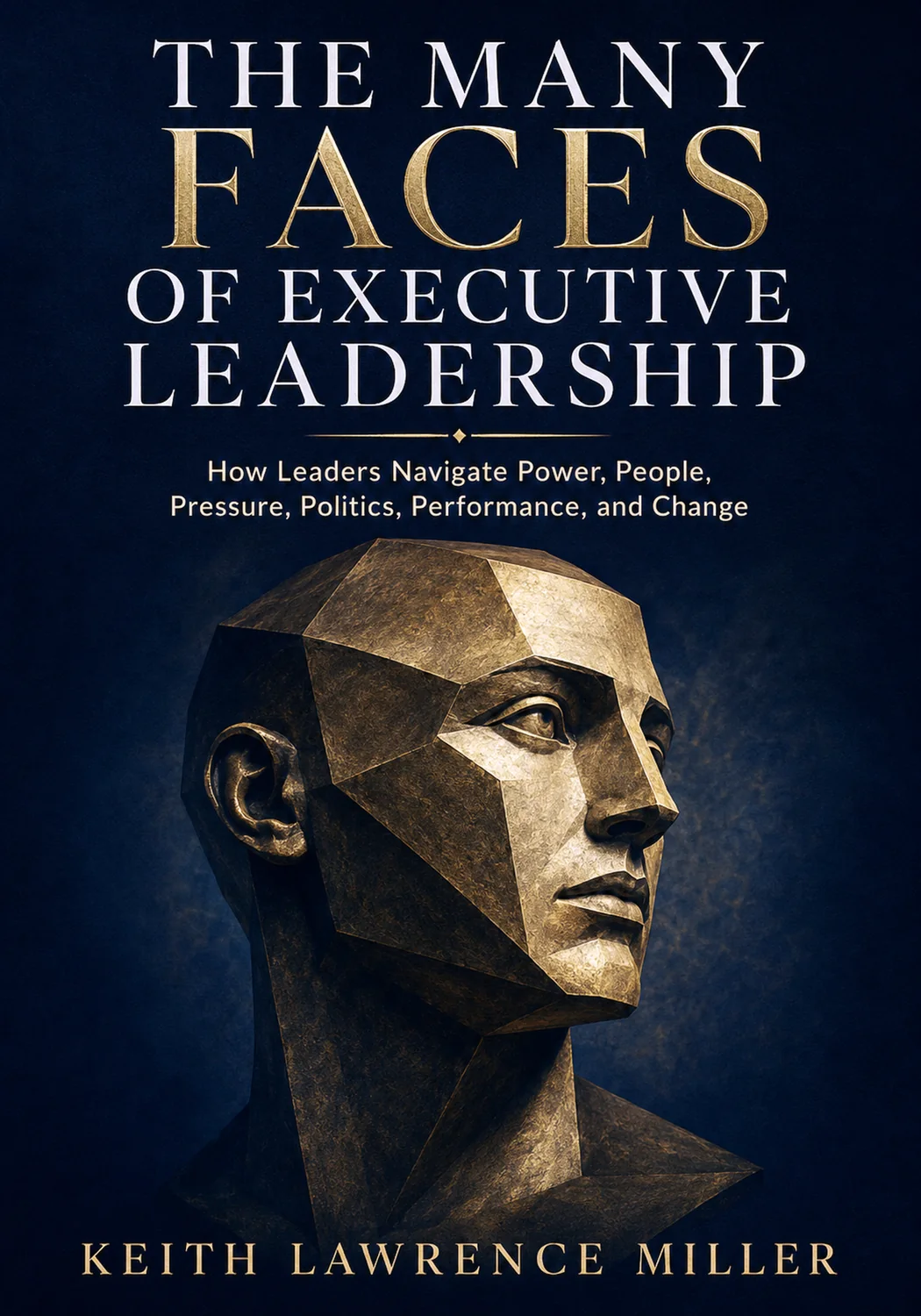
What this book is trying to do
Executive leadership is not one ideal style. It is a discipline of reading consequential situations, choosing among imperfect responses, executing with procedural and political awareness, and learning after the outcome.
Who it is for: Executives, newly promoted leaders, managers of managers, executive coaches, leadership-development cohorts, succession candidates, and organizations confronting high-stakes people and change decisions.
Architecture
Inside the book
01The Executive Self
02People and Performance
03Power, Politics, and Influence
04Decisions Under Pressure
05Conflict, Crisis, and Ethical Pressure
06Change and Organizational Complexity
07Derailment, Failure, and Recovery
08Legacy, Succession, and Renewal
Key ideas
Questions and concepts carried through the work
- Leadership becomes most consequential where certainty ends.
- Power changes what information reaches the leader and how others interpret ordinary behavior.
- System conditions can produce patterns that are misdiagnosed as individual failure.
- A repeatable judgment process can create a disciplined pause between stimulus and organizational consequence.
Author platform
Use the book as an entry point
The 2.0 site connects books to speaking, essays, frameworks, and adjacent titles rather than treating each publication as an isolated product.