The central argument
What this book is trying to do
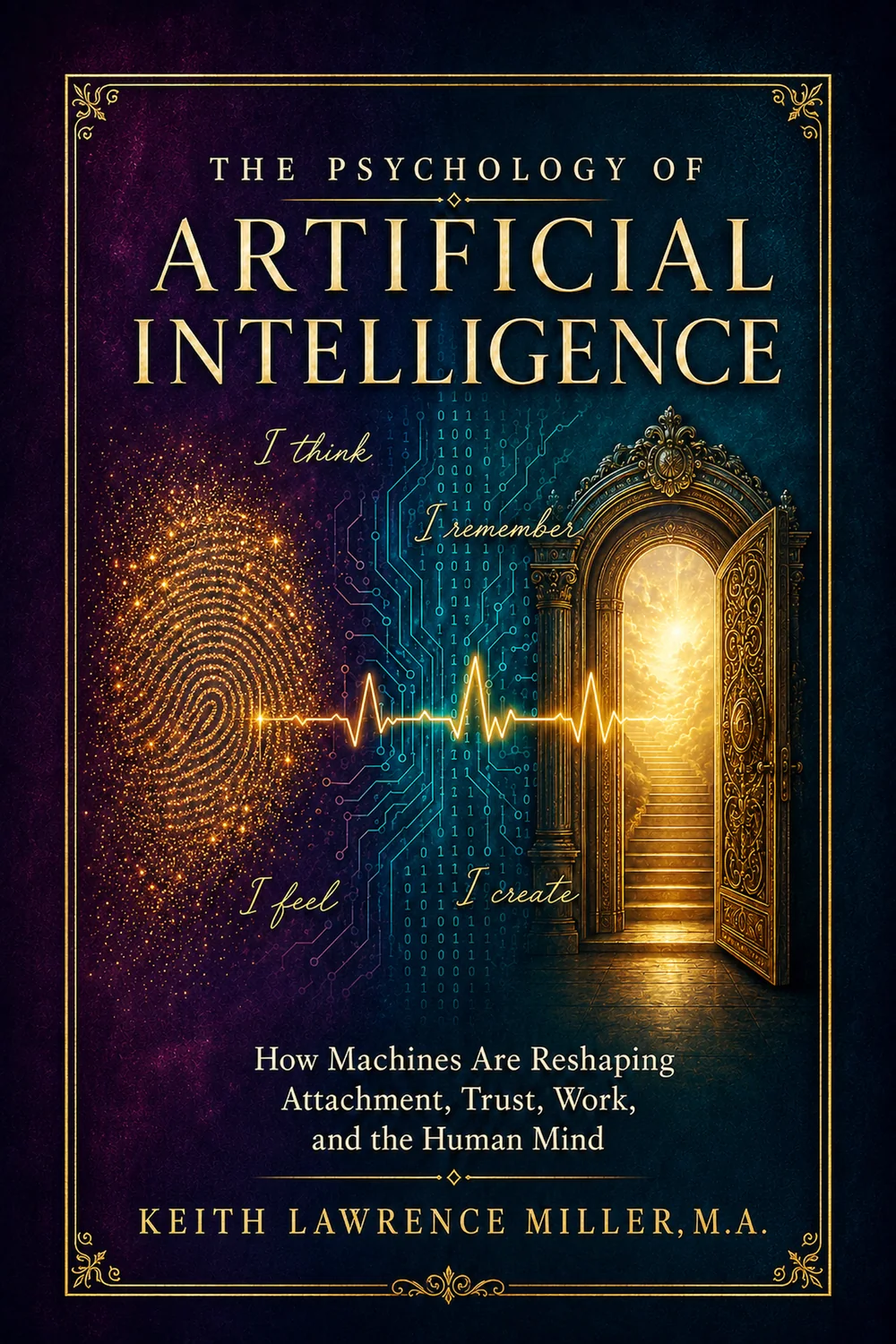
AI is entering the psychological environment: systems can become relational, persuasive, personalized, and cognitively embedded long before questions about machine consciousness are resolved.
Who it is for: AI users, leaders, parents, educators, clinicians, coaches, workers, policymakers, and readers concerned with how persistent conversational systems affect human thought and relationship.
Architecture
Inside the book
01Attachment and synthetic relationship
02Trust and anthropomorphism
03Cognition, memory, and offloading
04Work, identity, and expertise
05Mental-health and care boundaries
06Governance, design, and human responsibility
Key ideas
Questions and concepts carried through the work
- Perceived understanding can become psychologically consequential even when machine consciousness is unresolved.
- Availability, personalization, memory, fluency, and apparent empathy can interact with human needs and vulnerabilities.
- Cognitive assistance can increase performance while also reducing retained skill.
- The terms on which AI enters judgment, care, relationship, and identity are design and governance questions.
Author platform
Use the book as an entry point
The 2.0 site connects books to speaking, essays, frameworks, and adjacent titles rather than treating each publication as an isolated product.