The central argument
What this book is trying to do
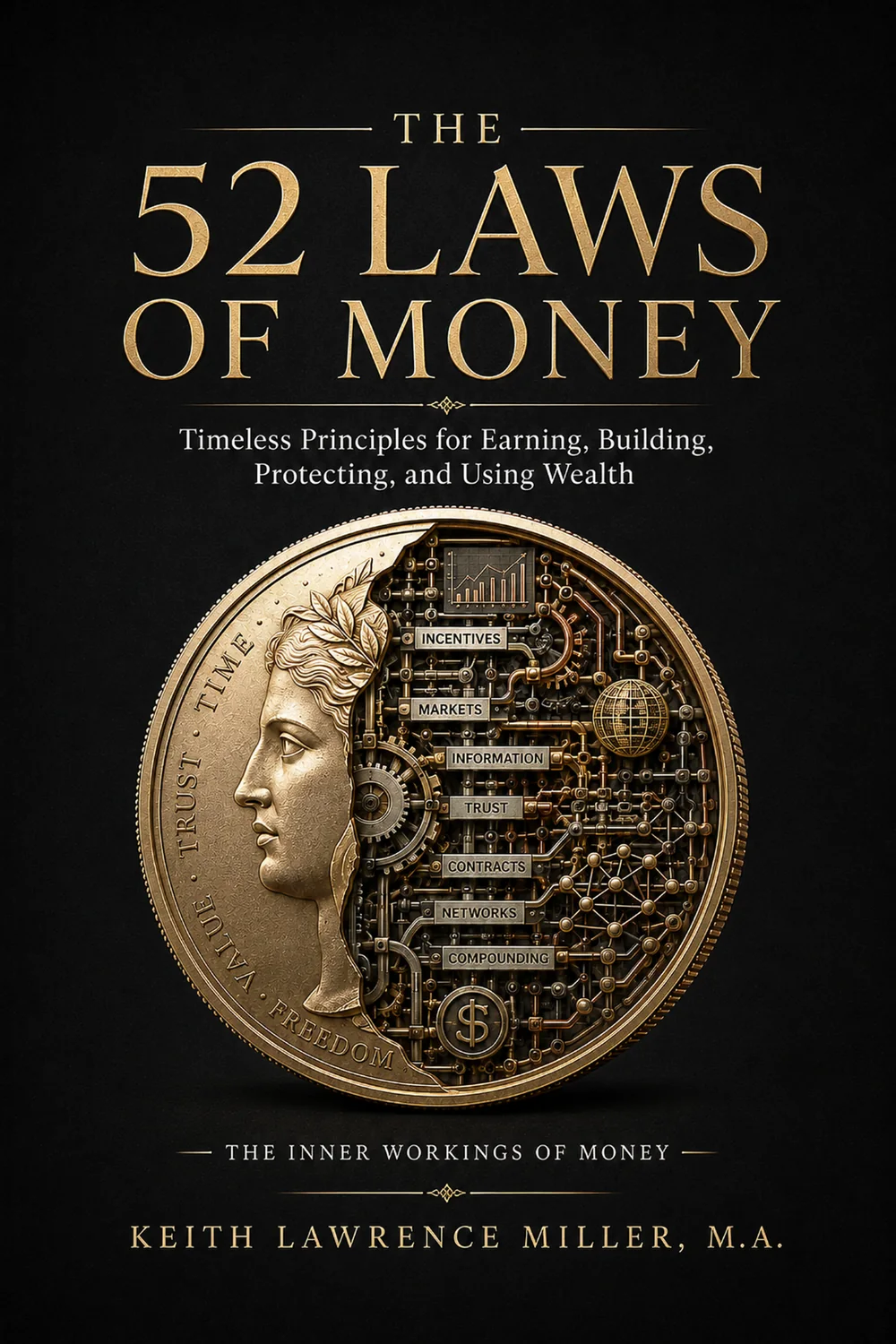
Money has recurring mechanisms—time, incentives, markets, information, trust, contracts, networks, ownership, risk, and compounding—but those mechanisms operate inside unequal and uncertain real-world conditions.
Who it is for: Readers who want a practical, systems-oriented framework for earning, building, protecting, and using wealth without reducing financial life to slogans.
Architecture
Inside the book
01Earning and value creation
02Ownership and compounding
03Risk and protection
04Markets and information
05Psychology and incentives
06Networks and trust
07Autonomy, stewardship, and legacy
Key ideas
Questions and concepts carried through the work
- Income and wealth are different systems.
- Compounding works on advantages and mistakes.
- Risk is part of wealth-building, not an embarrassment to be edited out of the story.
- Money is most useful when connected to freedom, resilience, stewardship, and choices.
Author platform
Use the book as an entry point
The 2.0 site connects books to speaking, essays, frameworks, and adjacent titles rather than treating each publication as an isolated product.